

Almost every Pakistani neighborhood runs on one thing—trust.
When you buy groceries and say, “Bhai, I’ll pay later,” the shopkeeper simply writes it in his khata (ledger). Later, when it’s time to settle, your total and the shopkeeper’s total rarely match.
That’s the problem with the trust-based system—everything depends on one person’s ledger. If that record changes or disappears, a dispute begins.
Now imagine this same system on a national scale—banks, universities, and property registries all keeping records in centralized databases. One authority, one server, full control. And if that authority alters the data? Chaos.
That’s exactly why blockchain technology was born—to replace “trust in people” with trust in technology. And this shift is one of the biggest reasons why blockchain in Pakistan and crypto in Pakistan are growing rapidly today.
What Is Blockchain, Really?
At its most basic level, blockchain technology is a decentralized database—but with a twist. The copy of the same ledger is stored on thousands of computers (nodes) rather than a single office or server that has the data.
- The blocks have a certain volume of data.
- Each block is hashed (fingerprinted in digital form).
- The hash of the last block is also stored in its block, connecting them.
- This creates an unbreakable chain of records—hence, blockchain.
Once data is added, it cannot be deleted or edited—it can only be appended.
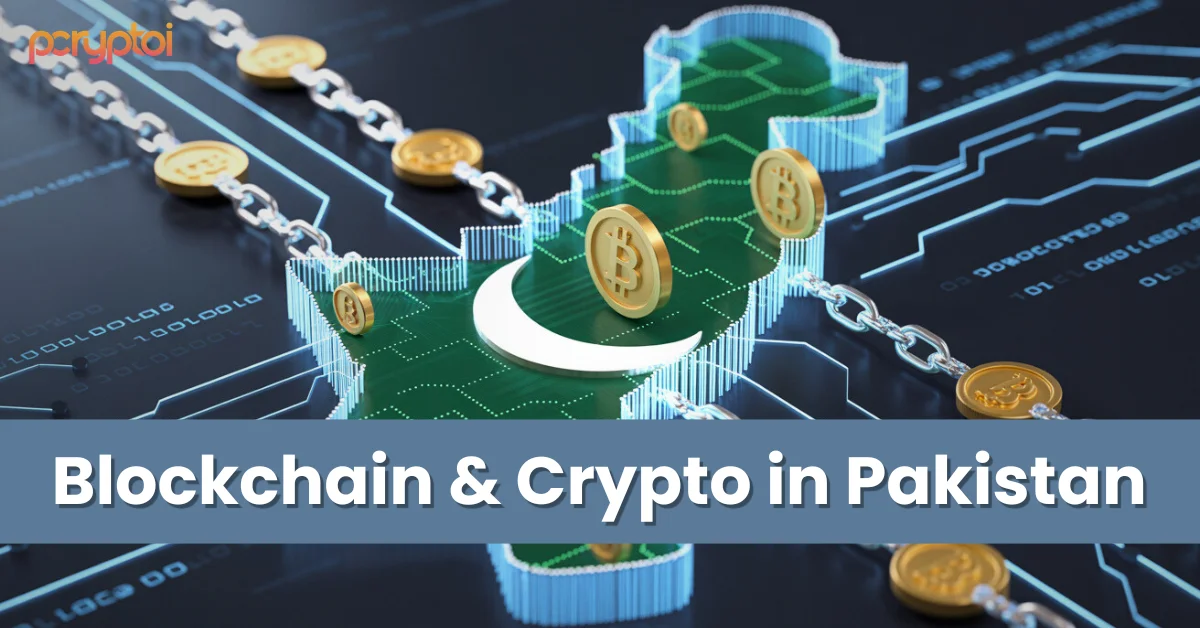
This “append-only” nature makes blockchain in Pakistan a powerful tool for transparency and tamper-proof digital records.

Why Blockchain Matters for Pakistan
Let’s discuss real property fraud in Pakistan, which is prevalent throughout the country.
Fake documents, duplicate plot files, missing records—you name it.
Recently, Karachi’s PECHS case revealed how 29 property records were forged without the owners even knowing!
If Pakistan’s real estate system ran on a Pakistan real estate blockchain, every plot could have a unique digital ID on a public ledger.
Whenever ownership changes hands, the transaction trail—seller, buyer, date, documents, and payment—would be visible to everyone: the registrar, society, FBR, and even the buyer.
No single officer could alter the record.
No “missing file” excuse.
No monopoly.
This is how blockchain technology can transform real estate, reduce property fraud in Pakistan, and build public trust.
How Does Blockchain Work?
New information is added to the ledger only after being verified by thousands of nodes (computers) before being added.
The miners in the Bitcoin blockchain solve advanced puzzles or Proof of Work to generate new blocks in the chain.
This makes the system sustainable and decentralized—no intermediary required. This also explains why Bitcoin in Pakistan and crypto in Pakistan have become popular discussion topics among young investors.
The 3 Major Practical Applications of Blockchain
1. Cryptocurrency
The most renowned use of blockchain technology. Any cryptocurrency exchanges, Bitcoin, Ethereum, and so on, are logged to a shared registry.
Customers own online wallets that have special identities to transfer money worldwide through peer-to-peer.
This is why crypto in Pakistan, Bitcoin in Pakistan, and digital payments are becoming mainstream discussions.
2. Supply Chain Tracking
Companies like Walmart and IBM use blockchain technology to track their food supply chain.
From farms to packaging to shipping—every step is recorded transparently.
If a fruit batch is spoiled, they can instantly trace its exact source.
3. Tokenization of Assets
Gold, property, shares — all can be tokenized on the Blockchain.
Every token represents ownership of a real-world asset.
This makes trading and transferring ownership faster, safer, and borderless.
In the future, tokenization can become a major part of blockchain in Pakistan and even enhance Pakistan’s real estate blockchain systems.
Traditional System vs Blockchain System
| Traditional System | Blockchain System |
|---|---|
| Centralized ledger managed by one person | Decentralized ledger shared by thousands of nodes |
| High risk of data manipulation | Nearly impossible to tamper |
| Lack of transparency | 100% transparent and traceable |
| Property frauds & missing files | Secure and verifiable ownership trail |
| Manual verification | Automated consensus |
This comparison clearly shows why blockchain technology and crypto in Pakistan are becoming major topics today.
Blockchain and Pakistan’s Future
In a country where property disputes and real estate scams clog our courts, Blockchain in Pakistan offers a practical solution.
A digital property registry built on Pakistan’s real estate blockchain could eliminate fake ownership, increase transparency, and protect citizens’ rights.
Imagine if every land record, transaction, and power of attorney were digitally verified and publicly visible — Pakistan’s property market could finally become trustworthy and efficient.

Final Thoughts
Blockchain is not a technology; it is a computer system of trust in the digital era.
Whether it is the khata of your local shop or billion-rupee property records, the Blockchain technology protects transparency, security, and the impossibility of corruption of data.
So, what do you think?
Can Blockchain in Pakistan really solve property fraud in Pakistan?
Would you trust a Pakistani real estate blockchain system more than a paper file?
Let us know in the comments, and don’t forget to follow our next episode on crypto in Pakistan, tokenization, Web3, and Pakistan’s digital future.
Table of Content
Table of Contents
ToggleAbout Company
pakcryptoinfo is a team of crypto enthusiasts, traders on a mission to simplify digital currency for everyone. We are dedicated to providing innovative solutions tailored to your needs. With a focus on quality and customer satisfaction, our team works tirelessly to ensure your experience with us is seamless and rewarding.
Most Recent Posts
- All Posts
- Crypto and Islam
- Crypto News
- Featured Personalities
- Pak Crypto News
- PakCryptoInfo Blogs
Top Crypto Coins

Bitcoin (BTC)

Ethereum (ETH)

BNB (BNB)

XRP (XRP)

Solana (SOL)

Dogecoin (DOGE)

Cardano (ADA)

Bitcoin Cash (BCH)

Litecoin (LTC)

Sui (SUI)

Polkadot (DOT)

Arbitrum (ARB)

Dash (DASH)
Follow on Social Media
Buy Crypto
If your are beginner and want to start your journey in crypto also want to get the basic guide we can help you to start your crypto journey in buying crypto and many more.
 Tether
  USDC
USDC  TRON
TRON  Lido Staked Ether
  Figure Heloc